Volunteer rescue squads from three states team up in Jackson County for a full day of intensive cave rescue training
Story By Katie Hightower
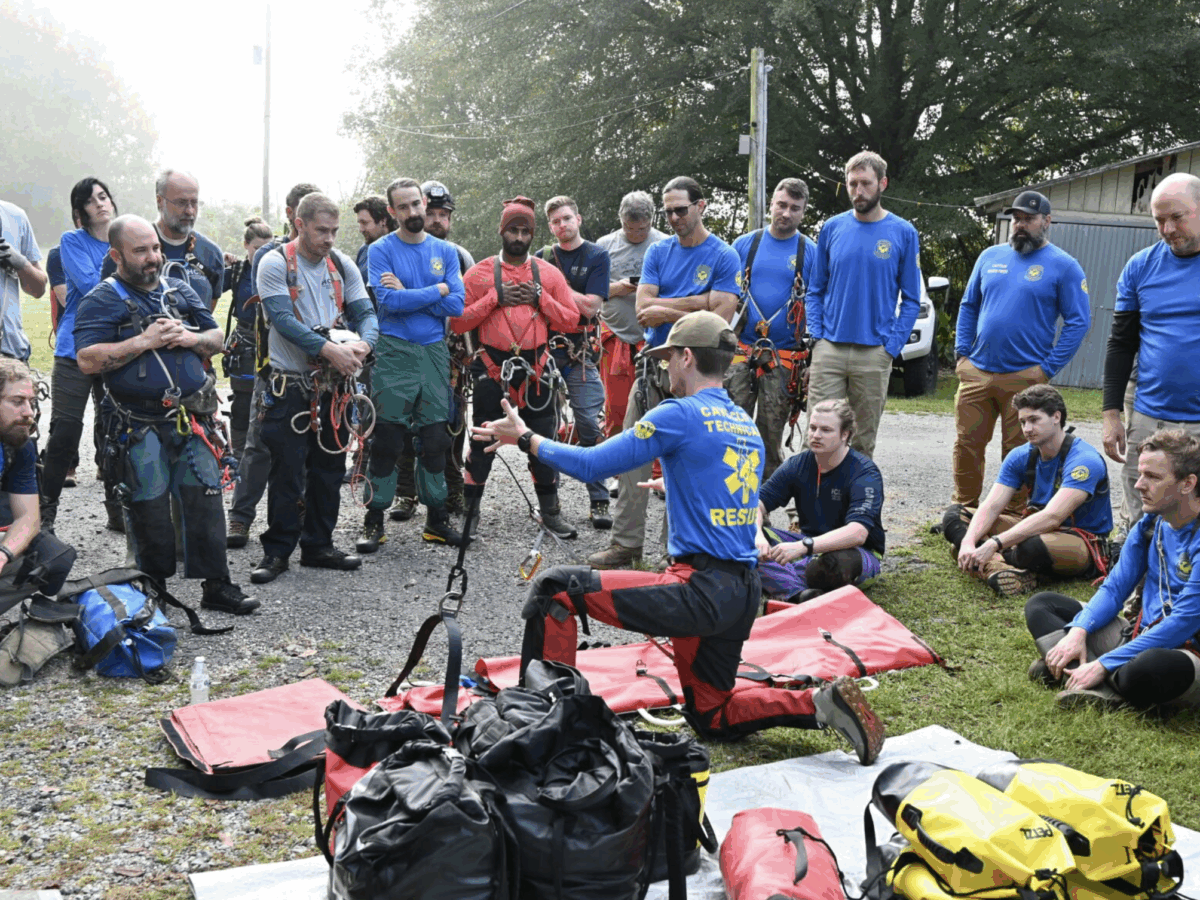
On Sept. 27, volunteer rescue squads from three states teamed up in Jackson County for a day of cave rescue training. Over 50 people participated in the 10-hour training session that included two mock patient transports and tested new communication technology.
The inter-agency training included the Scottsboro Jackson County Rescue Squad, the Huntsville Cave Rescue Unit (HCRU), the Chattanooga Hamilton County Rescue Service and the Blacksburg Volunteer Rescue Squad from Virginia. The training not only prepared rescuers for emergency response, it also offered an opportunity for teams to build camaraderie with other agencies.
The day of training began with a meeting to review the day’s activities and gear available to the rescue teams. The group was encouraged to make up teams with more experienced rescuers paired with those who have less experience. The experienced members were encouraged to talk through the process to teach others about it.

The group also tested new communication technology that would allow for both wired and wireless communication throughout the cave. Bob Reese from HCRU, worked to develop the changes to existing tech that would allow for both wireless and wired capabilities over a Long Range Wide Area Network or LoRa WAN. Rescuers downloaded an app which connected to the network. Through the app, rescuers could text their situation both directly to the command post and with other rescuers in the cave. They could also opt to use speech to text as a hands-free means to communicate. Reese said he developed the tech after his colleague, Jamie Moon, came up with the idea.
“It’s cavers rescuing cavers,” said Chad Craig, of the Scottsboro Jackson County Rescue Squad. “All of the volunteers working here today are also cavers.”
Craig said the best way to prevent rescue operations was preparation. He said to always let someone outside know when you are going caving and the expected return time. “This is the most important thing: set a call out time and follow it,” Craig said.
He said it was best to cave with three individuals so that if someone gets hurt, one person can stay with them while the other can go get help. Craig recommended several items for cavers to take with them when they explore caves: a helmet, three light sources, dry warm clothes, sturdy boots, gloves, knee pads, food and water.
“People get anxious and start to move. It’s best to stay put,” Craig said. He added that was also helpful advice when hiking in the woods because newer iPhones have satellite location services which have helped with rescue efforts.
Captain Eddie Tigue from the Scottsboro Jackson County Rescue Squad said that one of the busiest caves in Jackson County was the Tumbling Rock Cave. The cave saw over 4,000 visitors from all over the world each year. In order to visit the cave, visitors must first secure a permit through SCCI which will give cavers a code to the lock on the cave’s gate.
“At any give day, someone is in a cave in Jackson County,” Tigue said. “When we get an initial call, we will pool all of our resources to do it.”
With over 3,500 charted caves in Jackson County, Northeast Alabama has become one of the top destinations for caving enthusiasts from all over the world. Through the years, thousands flocked to the area to enjoy the sights of Jackson County’s caves. With the increased exploration of caves in the area, the need for rescue squads like those who attended the training has been crucial for the safety of both local explorers and visitors to the county.
“Everyone here, from all these agencies, are volunteer and nonprofit,” Craig said.
For information on how to support local rescue squads, please visit www.sjcrs.org, www.hcru.org and www.chcrs.org.