Staff Reports
Residents in Northeast Alabama are reporting an unusual sight — what looks like snow drifting through the air. But the white flakes aren’t snow or cotton — they’re insects.
The culprits are Asian Woolly Hackberry Aphids, tiny nonnative pests that have descended on the region in what some residents are calling a “plague.”
One local resident first noticed the insects earlier this month, describing them as “tiny albino flies” floating near trees at dawn. A closer look — and some research — revealed the insects to be Shivaphis celti, better known as Asian Woolly Hackberry Aphids.

What Are They?
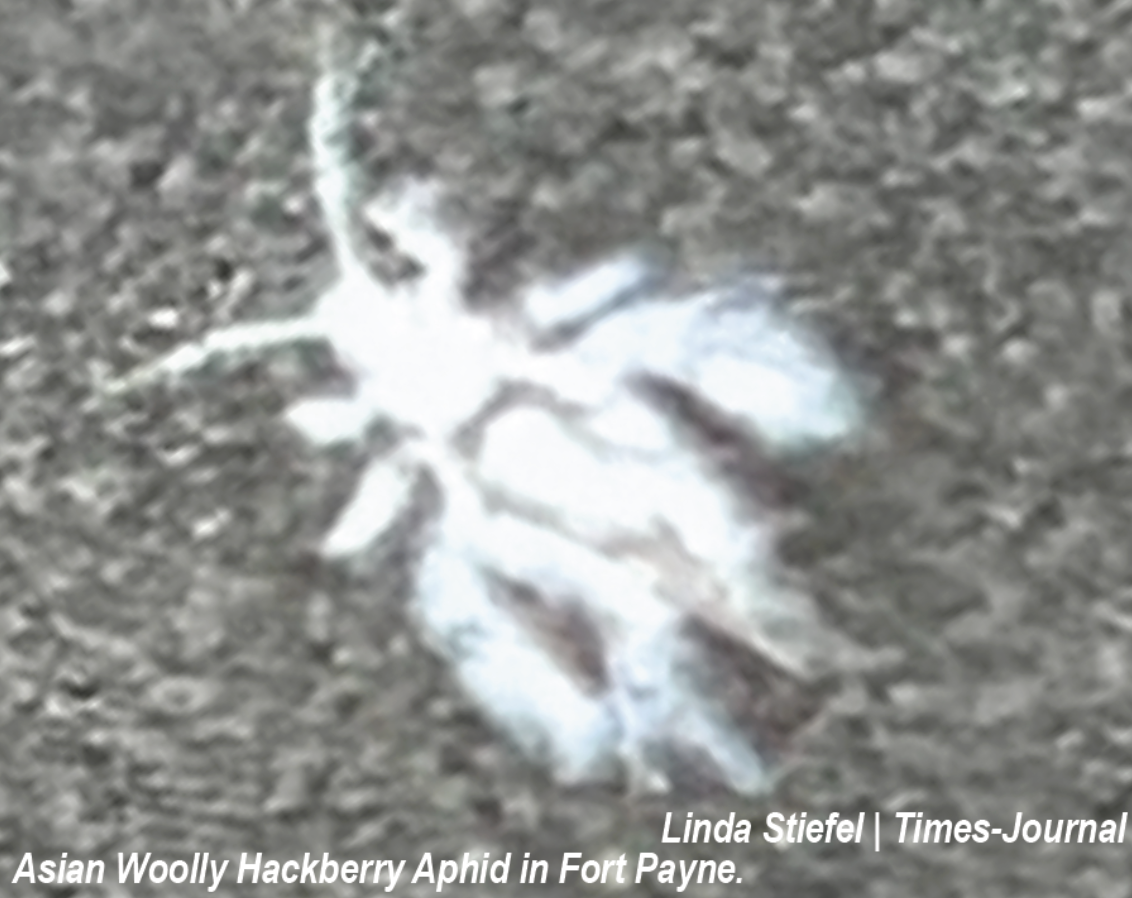
Asian Woolly Hackberry Aphids are small, sap-sucking insects — about 2 millimeters long — that primarily feed on hackberry trees (Celtis species). They are covered in a fuzzy, wax-like secretion, giving them a woolly or snowy appearance, especially when large numbers take flight.
According to the Center for Invasive Species Research and the University of California Integrated Pest Management Program (UC IPM), these aphids are invasive and often go unnoticed until populations peak.
Why It Looks Like
It’s Snowing
Every fall, winged forms of the aphids disperse from their host trees. When populations reach high levels, masses of these fuzzy white insects take to the air. In the right light, the effect can look like a gentle snowfall — a phenomenon now being reported in DeKalb County and other parts of northern Alabama.
Reports in local outlets confirm that extension agents have verified the presence of these aphids in Northeast Alabama.
When and Why
They Appear
Experts say the aphids have two population peaks each year: one in the spring and another in the early fall. During these periods, aphids reproduce rapidly. In the fall, winged males are produced, which mate and lay eggs that overwinter on the trees.
The insects are live-bearing during the growing season, producing multiple generations that feed on hackberry tree sap.
Nuisance or Threat?
Despite their dramatic appearance, the aphids rarely cause long-term harm to healthy hackberry trees. However, their presence can be a major nuisance.
Aphids excrete a sugary liquid called honeydew, which coats leaves, cars, patios, and other surfaces beneath infected trees. This sticky residue can lead to the growth of sooty mold, a black fungus that further aggravates homeowners.
While sooty mold and sticky driveways are unsightly, experts say they’re not typically harmful to humans or animals. However, during particularly heavy infestations, leaves may yellow or fall prematurely as trees react to the stress of sap loss.
In areas experiencing drought stress or other environmental factors, aphid damage may be more pronounced.
Why 2025 May
Be Worse
Though no official bulletin has yet been issued specifically for 2025, experts believe this fall’s outbreak may be particularly intense.
This year’s mild summer and higher-than-average rainfall may be fueling larger aphid populations. Wet weather helps trees stay vigorous — but also may reduce populations of natural predators that keep aphids in check.
In combination with the aphids’ regular fall dispersal, these conditions may create the appearance of a sudden “insect blizzard” over parts of Northeast Alabama.
What Can Be Done?
Homeowners dealing with aphids on their property have a few options:
• Hose Off Trees: A strong spray of water can help dislodge aphids and remove honeydew from small or young trees.
•Preserve Beneficial Insects: Ladybugs and lacewings are natural predators of aphids. Avoid broad-spectrum insecticides that could harm these helpful bugs.
•Clean Surfaces Promptly: Honeydew can become difficult to clean once sooty mold develops. Regular washing can reduce mess and staining.
•Long-Term Planning: Insecticidal treatments may be applied in spring or early summer to reduce future outbreaks, though systemic treatments should be used cautiously to avoid harming pollinators.
When Will It End?
The aphids’ presence typically fades as the weather cools and leaves begin to fall. For now, residents are advised to be patient and take comfort in the fact that — despite the mess — the insects are harmless to people and pets.